Introduction
Education is the foundation of a progressive society. The Government of India introduced the Right to Education (RTE) Act, 2009, which guarantees free and compulsory education to children between 6 and 14 years, ensuring access to quality education for all.
What is the Right to Education (RTE)?
The Right to Education is a fundamental right under Article 21A of the Indian Constitution. It came into effect on 1st April 2010 and ensures education as a legal right for every child.
Key Features of the RTE Act
- Free and compulsory education in government schools
- Applicable for children aged 6 to 14 years
- 25% reservation for economically weaker sections in private schools
- Equal opportunities without discrimination
- Qualified teachers in schools
- No detention policy till elementary education
Objectives of RTE
- Universal access to education
- Reduction in dropout rates
- Promotion of social equality
- Improvement in education quality
- Empowerment through knowledge
Importance of RTE in India
The RTE Act helps eliminate illiteracy, reduce child labor, promote gender equality, and build responsible citizens, contributing to national development.
Challenges in Implementation
- Poor infrastructure in rural areas
- Lack of trained teachers
- Low awareness among parents
- Quality issues in education
Conclusion
The Right to Education is a major step toward a better future. Continuous improvements are needed to ensure every child benefits from this right, as education is the key to equality and growth.
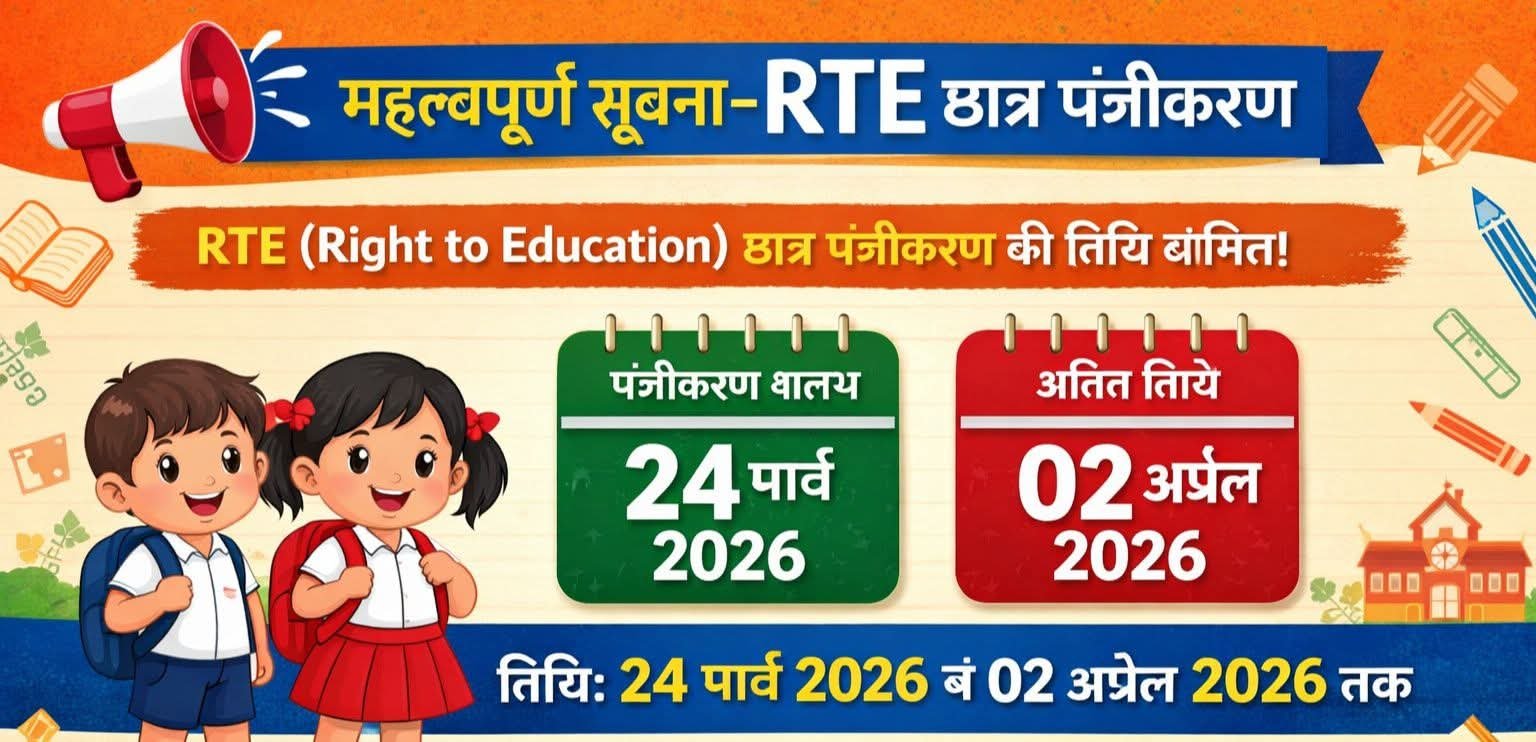
महत्वपूर्ण सूचना - RTE छात्र पंजीकरण
RTE (Right to Education) छात्र पंजीकरण की तिथि घोषित कर दी गई है।
पंजीकरण प्रारंभ: 24 मार्च 2026
अंतिम तिथि: 02 अप्रैल 2026
खण्ड शिक्षा अधिकारी कार्यालय स्तर पर आवेदन पत्र एवं सम्बन्धित अभिलेखों को जमा कराने की अन्तिम तिथि 07 अप्रैल 2026 तक विस्तारित की गयी है।
सभी अभिभावकों को निर्धारित तिथि के भीतर अपने बच्चों का पंजीकरण करने की सलाह दी जाती है।
अधिक जानकारी के लिए संपर्क करें।
+91 9690353517
2026-03-26 09:06:41
Good information ????